
Should Ghana Reintroduce Corporal Punishment in Schools?
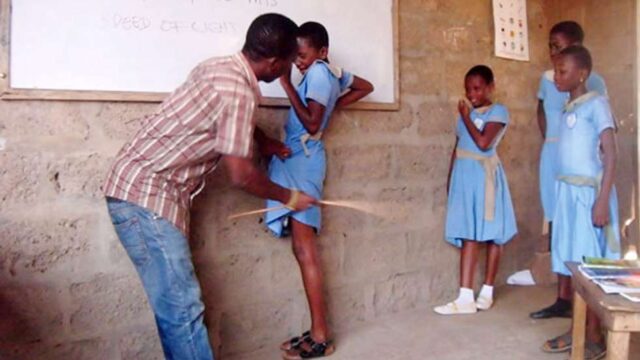
The recent debate over whether Ghana should reintroduce corporal punishment into its schools is one that deserves thoughtful reflection rather than emotional reactions. When I heard the question being raised by the Minister of Education, I was deeply concerned—not because discipline is unimportant, but because I believe we are asking the wrong question.
The real issue is not whether teachers should be allowed to cane children again. The real issue is whether parents, communities, and schools are fulfilling their respective responsibilities in raising disciplined and responsible citizens.
As a Special Needs Consultant, I have spent years learning about child development, behaviour, and education. I do not claim to have all the answers from higher education and certificates, but I boast of continuing learning; one lesson has remained constant throughout my journey: behaviour is not formed in schools, but long before a child enters the classroom.
Character Begins at Home
Every child receives their first education at home. Parents, siblings, relatives, neighbours, and the wider community shape a child’s values, attitudes, and behaviour long before teachers meet them.
Schools build upon that foundation—they do not create it from nothing.
Children growing up in different environments inevitably face different influences. While many young people overcome difficult circumstances to become outstanding citizens, others simply absorb the values of the environment around them. This reality reminds us that parents cannot outsource the responsibility of raising children to teachers.
Unfortunately, many people who support the return of corporal punishment seem to believe that teachers possess some magical ability to correct years of poor parenting through physical punishment. No. That’s a myth.
Caning Does Not Build Character
Supporters of corporal punishment often point to the immediate obedience it produces. But immediate compliance should never be confused with genuine change of character.
A child may stop misbehaving because they fear pain. That does not mean they have learned honesty, responsibility, empathy, or self-discipline through consistent canning. Those qualities are developed through guidance, consistency, positive role modelling, and meaningful consequences—not through fear.
Research in child psychology has repeatedly shown that excessive physical punishment can increase resentment, aggression, anxiety, and emotional withdrawal rather than genuine behavioural change. The aim of discipline is to teach, not merely punish or inflict pain.
A Lesson I Learned at Achimota School
My own experience at Achimota School in 2003 shaped my views on this issue.
One day, a female teacher became frustrated because the class was making too much noise. Instead of identifying those responsible, she invited another teacher to cane every student in the classroom.
Everyone accepted the punishment except me.
At the time, I was the Fraser House Prefect. I believed it was fundamentally unfair to punish every student simply because the teacher had lost control of the class. I refused the cane.
My refusal eventually brought me before the school authorities.
When I explained my reasoning to the headmistress, Mrs Brew-Graves, she listened patiently instead of reacting emotionally. Rather than forcing me to accept the cane, she offered an alternative punishment. It’s another story for another day, because I never truly did the alternative punishment. It was just meant to distract the teachers so they would leave me alone.
That moment taught me an important lesson.
Good leadership listens before it punishes.
Discipline does not require violence. It requires wisdom, fairness, and the willingness to understand each situation before passing judgment. Punishing a child who grew up in the Zongo with parents who praise him for fighting in Achimota School with the aim of making him stop fighting the other students is like pouring water on the stone to make it softer than usual.
Even Scripture Calls for Wise Parenting
Many people defending corporal punishment often quote Proverbs, particularly the passages referring to “the rod.”
However, Scripture should be read as a whole.
The New Testament shifts the focus from punishment to loving discipline. In Ephesians 6:4, fathers are instructed not to provoke their children to anger but to bring them up through loving instruction and discipline. Likewise, Colossians 3:21 warns parents not to embitter their children lest they become discouraged.
Jesus Himself demonstrated this higher principle.
When the woman caught in adultery was brought before Him, Moses’ law demanded severe punishment. Yet Jesus responded with wisdom and compassion, challenging those without sin to cast the first stone. He neither denied the seriousness of sin nor ignored justice; instead, He revealed that correction without mercy fails to transform hearts.
The goal of discipline should always be restoration rather than revenge.
In special needs education, we refer to this approach as **positive reinforcement**—encouraging desirable behaviour through guidance, consistency, and constructive support rather than fear.
Parents Must Reclaim Their Responsibility
As a father of two children, I understand that discipline begins at home.
My wife and I intentionally supervise where our children go, know who they spend time with, and avoid exposing them to unnecessary conflict. We encourage honesty, teach them to accept responsibility for their mistakes, and maintain open communication with us and their teachers.
We do not expect teachers to perform miracles.
Instead, we see education as a partnership between home and school.
When parents provide a strong moral foundation, teachers are able to focus on teaching rather than attempting to repair years of neglected character formation.
The Debate We Should Really Be Having
Rather than debating whether canes should return to classrooms, I urge the Minister to ask far more important questions.
How can we equip parents to raise emotionally healthy and responsible children?
How can schools strengthen guidance and counselling services?
What roles can chiefs, pastors, or community leaders create environments that encourage discipline, respect, and accountability?
These are the conversations capable of producing lasting change in our children.
I remember a student during my junior high school years in Amazing Love School in Denu who was nicknamed “Dead Body” because no amount of caning appeared to affect him. He endured every beating without flinching and continued repeating the same mistakes.
His story perfectly illustrates a simple truth:
The cane doesn’t have the power to change a heart that has not first been taught values.
In conclusion, the future of Ghana’s education system will not be secured by bringing back corporal punishment.
It will be secured by raising stronger families, supporting parents, investing in counselling, equipping teachers with modern behavioural management strategies, and creating schools where discipline is built upon respect rather than fear.
Teachers are educators, not ‘second-hand’ parents; that’s if I can use the above phrase without causing injury to the English Language.
The solution to disciplined children cannot be found in better canes, but rather in building better homes.
Christopher Klove – christopherklove@gmail.com
These all illustrious ideas, the writer is on point.
However, another foundational weakness is the eroding of our soci- cultural and religiious valies. These values held the society and ensured the dignity, respect and controls that cut across all segment of the society. We have replace them and adopted instead of adapting them to our value. The result is this self inflicted hence this debate.